Data center and network infrastructure damage in Ukraine and Russia
Last updated:
Confirmed, operator-reported, or attributed reports, September 15–November 4, 2026
Scope: primarily Kyiv, with selected Ukrainian and Russian locations where incidents document attacks on data centers, telecom infrastructure or network facilities. Russian entries are included as reported incidents and context for the cross-border campaign, with claims attributed to the relevant companies or sources. The Oct. 4 Ukrtelecom entry is in Dnipro.
AT A GLANCE The chronology currently records more than 20 entries covering named companies, facilities or network systems affected, with operator-reported physical damage accounting for the largest group. Other entries document operational disruption, official or Russian claims, and attacks whose physical effect remains unverified. Several operators have moved services or customer data to backup infrastructure after damage to Kyiv facilities.
CYBERSECURITY CONTEXT Microsoft’s Digital Defense Report 2026 ranks Ukraine third worldwide and first in Europe by the number of organizations and users affected by recorded cyberattacks in the first half of 2026. Ukraine accounted for 4.8% of those affected globally, while Russian state actors accounted for 14% of their recorded activity against Ukraine. Government agencies and services were the largest targeted sector globally, accounting for 27% of observed activity, up from 17% in 2025. Microsoft Digital Defense Report 2026.
confirmed by officials · operator-reported · official claim · Russian claim · unverified · operational impact
| Date | Company / facility | What happened |
|---|---|---|
| Nov. 4 · 13:15 | Phoenix telecommunications facility / data center, Donetsk | reported drone strike · physical damage and service disruption A drone strike hit Phoenix telecommunications infrastructure in occupied Donetsk. Ukrainian military Telegram channel Operatyvnyi ZSU published photographs of the facility after the attack at 13:15. Ukrainian media reported at least three impacts and a fire. The occupation-appointed mayor acknowledged damage to a telecommunications company building, while local reports described interruptions to mobile communications. Other accounts reported damage to a gas pipeline manifold and vehicles, but those details have not been independently verified here. Phoenix is a telecommunications operator established by the Russian occupation administration in 2015 using infrastructure seized from Kyivstar. Its network serves the occupation authorities and is also used by Russian military personnel. The extent of damage to data-center equipment and the duration of any service disruption have not been established. 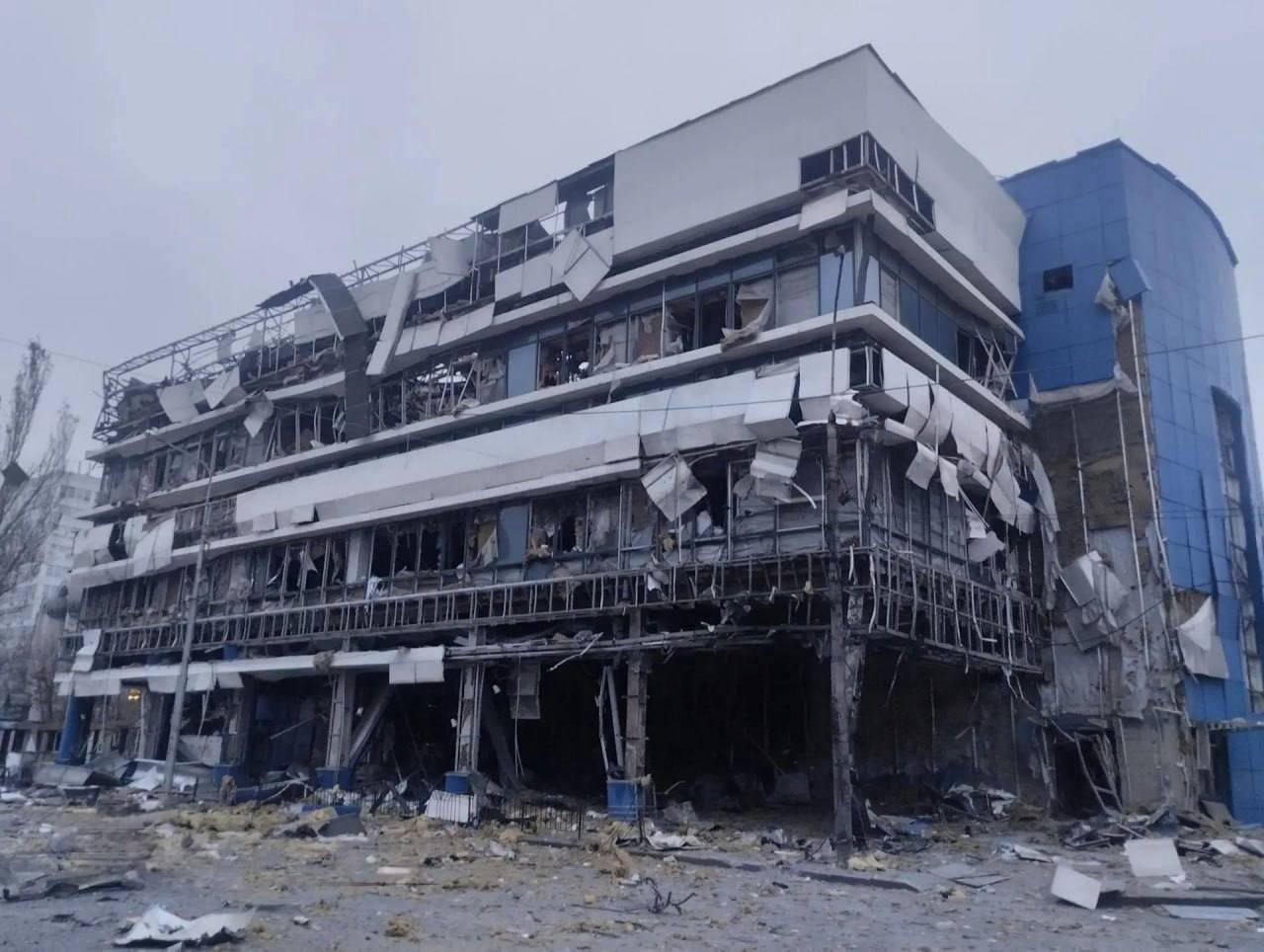 |
| Oct. 26 | Ukraine’s banking system / data-center resilience | NBU governor’s statement National Bank of Ukraine Governor Andriy Pyshnyy said Russian attacks on data centers had not substantially affected the banking system, but had exposed gaps in some banks’ business-continuity testing protocols. He said banks and the NBU work through attack scenarios and must test their procedures routinely. Pyshnyy cautioned that 100% protection against wartime damage cannot be guaranteed and that intensified attacks could cause temporary disruption to parts of the network. He also called for discussion of strategic autonomy and said sovereign cloud infrastructure should be among the first topics. The remarks point to resilience planning and cloud architecture as part of the banking sector’s response to physical attacks on digital infrastructure. Source: Interfax-Ukraine interview with NBU Governor Andriy Pyshnyy at the IMF and World Bank Group Annual Meetings in Bangkok, October 26, 2026. |
| Oct. 23 | Kyiv data centers / national cybersecurity | official statement · aggregate assessment Prime Minister Serhiy Koretsky said Russian attacks had damaged approximately ten data centers in Kyiv during September. He described the strikes as part of a systematic campaign against digital infrastructure and said cyberattacks against government systems and businesses were also intensifying, with artificial intelligence being used. Koretsky instructed executive bodies to establish cybersecurity teams and acquire the necessary software. His estimate is an aggregate assessment of damage during September, not a report of ten additional incidents to add to the facility-by-facility chronology. Sources: Interfax-Ukraine, Oct. 23 · Hromadske, Oct. 23 |
| Oct. 20–21 | Ugletelecom / Elecom, Donetsk; Lugacom, Luhansk | reported attacks · infrastructure damage On October 20, a strike hit a building at 60 Postysheva Street in occupied Donetsk that was identified as housing the Ugletelecom / Elecom data center. Petro Andriushchenko, head of the Center for the Study of Occupation, said the facility had been destroyed. On October 21, drones hit a building in occupied Luhansk housing Lugacom, the Telecommunications Services Centre and an IT and technical-support centre. Images showed substantial damage. Available reporting does not establish whether data-center equipment was hit or quantify any resulting service disruption. Sources: Ukrinform, Oct. 20 · Radio Svoboda, Oct. 21 |
| Oct. 20 · reported Oct. 21 | GigaCenter data center, Kyiv | operator-reported · damage GigaCenter said its Kyiv data center was damaged in a Russian attack on October 20. The company warned that customers may experience disruptions to equipment hosted at the facility and said it was working to contain the consequences of the strike. The extent of physical damage and any service interruptions had not been specified in the report. GigaCenter provides colocation for business servers and IT equipment and is part of GIGAGROUP, alongside GigaTrans, GigaCloud and GigaSafe. Source: GigaCenter statement on Facebook, reported by Interfax-Ukraine, October 21, 2026. |
| Oct. 19 · 10:18 | Datagroup data center, Kyiv | operator-reported · total destruction Datagroup's press service said the company's data center in Kyiv had been completely destroyed and could not be restored. The statement was relayed by the Realna Ukraina Telegram channel at 10:18 on October 19. The report establishes the company's stated assessment of the facility; the post supplied for this entry does not identify the exact site or provide further technical details. |
| Oct. 14, 18 | Sberbank data-processing center, Balakovo; VK data center, Leningrad region, Russia | operator-confirmed attacks · damage extent undisclosed Sberbank confirmed that its data-processing center in Balakovo, Saratov region, was attacked on October 14, but said its systems and services continued to operate normally. The facility was being developed to house a major supercomputer. On October 18, a VK data center in the Leningrad region was also hit. VK confirmed the attack and said its services remained operational. Neither company disclosed the extent of physical damage. Reports of wider disruption to Russian online services do not establish that either facility caused particular outages. |
| Oct. 14 · morning | Starshield / Ukrainian military satellite communications | operational disruption reported by Ukrainian officials and corroborated by Reuters Ukrainian officials and military sources reported that restrictions on in-motion satellite terminals disrupted drone missions overnight on October 13–14. Presidential adviser Serhii Beskrestnov said the military-grade Starshield service had been limited at speeds above 160 km/h and that Ukrainian forces had received no advance warning. Reuters cited a source in the 7th Rapid Reaction Corps who confirmed connection drops and mission cancellations. The exact scope, technical implementation and rationale for the change remain unclear. Starlink’s public help page says certain in-motion speed limits in Ukraine are implemented in coordination with the Ukrainian government for national-security and public-safety reasons; that general policy statement does not establish the details or timing of this specific change.  |
| Oct. 14 · 12:38 | Russian online services / downstream network impact | single-channel report · scope not independently confirmed Pravda Gerashchenko reported that Russian banks, marketplaces, food-delivery services and the Gosuslugi government portal were broadly inaccessible, including services on Russia’s so-called “white list.” The report is consistent with the wider pattern of downstream disruption following damage to three Yandex data centres in Sasovo, Kaluga and Vladimir, which has affected services and businesses relying on Yandex infrastructure. Russian financial publication Expert wrote on October 14 about continuing Yandex Pay problems and the risks that service interruptions pose to digital financial infrastructure. The Moscow Times reported partial restoration of Yandex Pay on October 13, while noting continued problems with Yandex Pro and Yandex Cloud. These reports corroborate ongoing disruption in parts of the ecosystem, but do not independently confirm this specific claim of a fresh, broad outage at 12:38, especially the failure of white-listed services. Outage-monitoring signals checked for this update were mixed and did not establish a nationwide failure of all the named categories. Sources: Pravda Gerashchenko, Telegram, report at 12:38 · Meduza, Oct. 12, on outages following three Yandex data-centre attacks · Le Monde, Oct. 13, on downstream service disruptions · DownRadar, Gosuslugi status and user reports · Expert, October 14, financial-infrastructure analysis · The Moscow Times, October 13, Yandex Pay partial recovery |
| Oct. 12 · reported | Starlink ground communications site, Sofia area, Bulgaria | reported allegation · official confirmation pending Bulgarian MP Ivaylo Mirchev said two masked men set fire to 11 of 17 antennas at a site near Sofia that he described as providing a backbone connection to SpaceX’s Starlink satellites, including for communications used by Ukraine. Bulgarian National Television reported the allegation on October 13. The reported number is not consistent across coverage: another Bulgarian report cited an unnamed source putting the number at nine. As of the latest reports consulted, the relevant authorities had not publicly confirmed the full account, the extent of damage or the perpetrators. Mirchev pointed to a similar reported incident in Poland, but a connection between the cases has not been established here. The allegation is recorded as a potential attack on communications infrastructure, not as a confirmed disruption to Ukrainian service. |
| Oct. 12 | Yandex data centres / Russian government | official acknowledgment / operator-reported impact Russian Digital Development Minister Maksut Shadayev told a State Duma committee that the attacks on Yandex data centres were unprecedented in scale. He said his ministry and the Defence Ministry were discussing ways to protect such facilities. Separately, Yandex said it was still assessing damage at the affected sites and could not give a reliable timetable for restoring the damaged infrastructure. Some services remained unavailable or impaired at the time of reporting. The minister’s remarks confirm that the government is discussing protection measures; they do not independently establish who carried out each attack or the full extent of damage. |
| Oct. 12 | Yandex data centres / online information environment | presidential statement / not independently verified Speaking by video to the Warsaw Security Forum, President Z said that after Ukraine’s response to Russian attacks on Ukrainian data centres, attacks on Yandex data centres coincided with a reduction in hate, division and provocation on social media. He attributed the change to fewer bots and said it had become clearer where they originated. This is Z’s assessment, not a verified measurement of bot activity. The reported service disruption at Yandex does not by itself establish who operated the accounts or prove the cause of any change in online discussion. |
| Oct. 11 | Yandex / Russian data-centre market | industry reporting / forecast Following reported damage or shutdowns at Yandex data centres in Sasovo, Kaluga and Vladimir, Kommersant reported that equipment replacement could take up to six months. Citing unnamed industry sources, it said Yandex was expected to seek equipment through multiple channels, including foreign suppliers, and that short-term pressure on hardware prices could follow. These are market-source expectations, not a confirmed Yandex procurement announcement or evidence that prices have already risen. The report does not establish that foreign purchases would involve sanctions evasion or other “grey” schemes. Separately, Yandex said it had arranged accelerated migration of customer services to VK Cloud, Selectel and K2Cloud, a continuity measure that does not itself replace damaged physical capacity. |
| Oct. 11 | Yandex data center, Vladimir, Russia | operator-reported / attributed attack Yandex Cloud said a drone attack damaged infrastructure at its data center in Vladimir and that operations at the site had been completely suspended. The company reported no injuries and advised customers to activate alternative disaster-recovery plans while it assessed the damage. The affected availability zone, ru-central1-a, was reported unavailable. Users and outage monitors reported disruptions affecting Yandex services, including Yandex Music and the Alice assistant / smart-home service. This is the third reported Yandex data-center incident in four days, following Sasovo in Ryazan Oblast and Kaluga. The incident and service impact are operator-reported; attribution of the attack is not independently established here. Sources: Reuters, Oct. 11 · Telegram report |
| Oct. 9 | Yandex data center, Kaluga region, Russia | operator-reported / Fire Point claim Yandex said a drone attack damaged part of its data center infrastructure in the Kaluga region, with several modules put out of operation. Ukrainian drone producer Fire Point said Ukraine’s military used its FP-1 one-way attack drones to strike what it described as Yandex’s largest data center, and said several modules were completely disabled. The company was assessing the damage. Yandex said no employees were injured at either the Kaluga or Sasovo sites. The available reporting supports damage to the facility and partial loss of infrastructure, but the weapon attribution and Fire Point’s description of the site are attributed claims. Sources: Reuters · Yandex statement, Oct. 9 |
| Oct. 9 | Government policy / data centres and telecom operators | official announcement Prime Minister Serhiy Koretsky said the Cabinet of Ministers had simplified access to property owned by business companies in which the state holds more than 50% of the shares. Data-centre and telecommunications operators will be able to lease qualifying property for digital and telecom infrastructure without an electronic auction. The simplified mechanism is to apply throughout martial law and for six months after it ends. Koretsky said the measure is intended to help businesses relocate and deploy IT infrastructure more quickly amid Russian attacks. This records a policy change, not evidence that a specific operator has leased a site or brought new capacity online. |
| Oct. 8 | Yandex data center, Sasovo, Ryazan Oblast, Russia | operator-reported / attributed attack Yandex said a drone attack overnight on Oct. 7–8 seriously damaged its Sasovo data center, caused a fire and forced the site to stop operating. The company said it could not yet confirm whether the equipment could be restored. Two of Yandex’s three AI supercomputers are housed at the facility, but Yandex has not confirmed whether they were damaged. Ukraine’s military did not publicly comment on this specific strike. President Z said Ukraine was responding “in mirror-like fashion” to Russian attacks on Ukrainian data centers, without naming the facility. The incident disrupted some Yandex services and its cloud infrastructure. Reports also described problems at other online services that rely on infrastructure providers, but the available evidence does not establish a nationwide Russian internet outage. |
| Oct. 7 | Omega Telecom | operator-reported Omega Telecom said its Kyiv data center is ceasing operations following the Russian attack. The company said specialists are continuing to restore communications channels and Internet access from backup sites. The statement records the shutdown of the Kyiv facility and the transfer of services to alternative infrastructure. It does not provide an independent assessment of the physical extent of damage. |
| Oct. 4 | Ukrtelecom, Dnipro | unverified Russian forces struck a communications-company premises in central Dnipro on the morning of Oct. 4, causing a fire. The Dnipropetrovsk regional military administration confirmed the attack on a communications company but did not name it. Ukrainian and local reports identified the building as Ukrtelecom, while that identification had not been officially confirmed by the authorities at the time of reporting. Information on casualties and the extent of damage was still being clarified. Source: UNN |
| Oct. 1 | Dline.ua / Dream Line | operator-reported Dline.ua said its data center at 28 Predslavynska Street in Kyiv was destroyed in a Russian strike. The company said all services and customer data were transferred to backup sites. Source: Dline.ua, via Ukrinform |
| Sept. 30 | Institute for Nuclear Research / Ukrainian Nuclear Data Center | confirmed by officials A Russian UAV struck the grounds of the Institute for Nuclear Research of the National Academy of Sciences of Ukraine in Kyiv, where the VVR-M research reactor is located. Ukrainian nuclear regulators said the reactor and its safety systems were not damaged and radiation levels remained normal. The institute hosts the Ukrainian Nuclear Data Center (UkrNDC), a subdivision of its Neutron Physics Laboratory, which maintains and compiles nuclear-data resources. This entry records an attack affecting scientific data infrastructure, rather than a conventional commercial data-center strike. |
| Sept. 30 | De Novo | Russian claim Russia's Defense Ministry said an overnight strike hit the De Novo data center in Kyiv, describing it as a major communications and internet-traffic facility. Reuters reported the claim but said it could not independently verify the extent of damage. De Novo's own website identifies its Kyiv site as a commercial data center and cloud facility. Status: Russian claim, physical damage not independently confirmed. Source: Reuters |
| Sept. 29 | Lanet | operational impact Lanet temporarily closed its Kyiv customer service center for security reasons, citing the safety of employees and visitors. The provider said its network continues to operate normally and customers can receive assistance remotely through online services and other communication channels. The company has not given a reopening date. This is an operational security measure, not a reported physical strike or confirmed network outage. |
| Sept. 28 | Dobrobut / Ukrtelecom | confirmed by officials Dobrobut confirmed that its branch at 40 Antonovycha Street in Kyiv was hit in the morning attack. Ukrtelecom's Kyiv branch is also officially listed at the same address. This establishes Ukrtelecom's presence at the building, but does not establish that Ukrtelecom equipment or offices were damaged. Source: Interfax-Ukraine |
| Sept. 27 | Varyag video | official claim Russia's 50th Separate Brigade "Varyag" published a video showing strike sequences it identifies as attacks on 11 Ukrainian data-center or network facilities: De Novo, PrivatBank, Kyivstar, United DC, Cosmonova, G50/NEWTELCO, Inter Cars, BeMobile, Datagroup, Parkovy and Volia. Several are independently documented elsewhere in this chronology. The video is evidence of the brigade's claimed strikes, not by itself of the extent of damage or service disruption at each facility. Source: 50th Separate Brigade Varyag |
| Sept. 27 | Kyivstar | confirmed by officials Kyivstar's press service confirmed that the building housing the company's main office in Kyiv was damaged in the morning attack. The company said no one was injured. This is confirmed damage to telecom infrastructure, not a confirmed separate data-center strike. Source: Interfax-Ukraine |
| Sept. 27 | Kyivstar | Later, local Telegram channels reported that another Kyivstar data center had been attacked. The report is recorded as preliminary and has not been independently verified. |
| Sept. 27 | Vodafone | Russian claim The Russian Defense Ministry reported that a Vodafone data-processing center in Kyiv had been hit, claiming it supports mobile communications and high-speed Internet services for the Armed Forces of Ukraine. Separately, dev.ua reported that the Telegram community MZU said a drone struck a building in Kyiv's Shevchenkivsky district housing a large Vodafone technical office. Vodafone declined to comment to dev.ua. Vodafone's own news page had no statement confirming damage as of the latest check. This remains an attributed claim, not a confirmed physical data-center damage report. Source: Reuters |
| Sept. 27 | Government internet continuity | official claim Prime Minister Serhiy Koretsky said Ukraine must plan for the worst-case scenario in protecting internet infrastructure. He said some infrastructure should be in the cloud, some abroad, and some in combinations of the two or all three approaches. |
| Sept. 27 | Kyiv data center | official statement President Z said Russian forces shelled a data center in Kyiv twice during the morning. The statement does not identify the operator or facility, so the incident is recorded without assigning it to a specific company. Source: President Z |
| Sept. 26 | Data centers / critical communications infrastructure | official statement Following a meeting of the Staff, President Z said additional decisions had been made to protect and ensure the uninterrupted operation of Ukraine's data-center infrastructure and other facilities critical to communications. He said full implementation of the decisions at all levels was the personal responsibility of government officials and the heads of the security services. |
| Sept. 25 | Parkovy data center | operator-reported Parkovy Data Center said in a statement published on its Facebook page that repeated Russian strikes caused critical damage to its Kyiv site and forced it to cease operations there. The company said services at the site cannot currently be restored, while customer data is held at backup facilities in the EU. This is an operator-confirmed physical data-center damage and shutdown. |
| Sept. 25 | Inkom business center / Datagroup | unverified A Russian drone struck the Inkom business center at 31/33 Smolenska Street (now Simyi Brodskykh Street) in Kyiv. The seven-storey, multi-tenant office building houses offices of different companies. Datagroup was reported as a tenant. The building itself is also associated with PrJSC Information Computer Systems (INCOM), whose registered and actual address is 31/33 Smolenska Street. The strike is relevant to the wider sequence of attacks on Kyiv's telecom and data-center infrastructure, but the available reporting does not establish that the entire building was a data center or that every tenant's equipment was hit. Source: Interfax-Ukraine |
| Sept. 25 | National network | official statement Presidential adviser Serhiy Beskrestnov said Ukraine's highly distributed Internet network should prevent a nationwide or citywide loss of Internet access despite attacks on communications infrastructure. He said localized outages remain possible and that repair costs may increase Internet service prices. |
| Sept. 24 | Etherlink | operator-reported Etherlink reported damage to its main network node. The company said the existing site could not be restored quickly and that it was moving the network core elsewhere. Source: dev.ua |
| Sept. 24 | Domonet | operator-reported Reported damage to switching equipment following the previous day's attack. Technical specialists said they had found a way to restore the equipment and expected to do so by 21:00. Source: dev.ua |
| Sept. 24 | KIEVNET | operator-reported Reported damage to one of its data centers, which supports part of its network. The provider said a loss of power could temporarily leave subscribers in central Kyiv without Internet access. Source: dev.ua |
| Sept. 24 | FAUST | operator-reported Reported infrastructure damage related to the previous day's attack and said it was working to restore its network. Source: dev.ua |
| Sept. 24 | Fex.net | operational impact Users experienced problems with the cloud service following the attack. The disruption was reported as an operational consequence of damage to Kyiv's digital infrastructure; no separate physical Fex.net facility strike was identified in the available reporting. Source: Ukrainska Pravda |
| Sept. 24 | KyivLink | operator-reported Reported damage to one of its technical sites and said it was working to restore normal network operation. Some users could experience temporary disruptions or unstable Internet access. Source: dev.ua |
| Sept. 24 | AMCU | confirmed by officials The Antimonopoly Committee said damage to infrastructure, including Internet providers, prevented timely publication of public-procurement appeal decisions. It said its services were fully restored by 13:30. Source: Ukrainska Pravda |
| Sept. 24 | NCEC | confirmed by officials The telecom regulator's website remained offline. NCEC said it was working to restore it and warned of possible disruptions to communications networks and services amid continuing attacks on telecommunications infrastructure. Source: Ukrainska Pravda |
| Sept. 23–24 | Cityhost | operator-reported Cityhost reported damage to equipment in one Kyiv data center. The company began restoring services from backup equipment abroad. |
| Sept. 23 | UTELS | operator-reported UTELS reported damage to its Kyiv data center, where its principal network equipment was located. Equipment was left without power and service was disrupted. Source: Interfax-Ukraine |
| Sept. 23 | Pavutyna | operator-reported Pavutyna reported damage to one of its data centers and a major network emergency. Source: Interfax-Ukraine |
| Sept. 23 | Crazy Network | operator-reported The company reported a missile strike on its central Kyiv internet-traffic-exchange data center/node. Customers in Kyiv, Vinnytsia and Khmelnytsky regions were affected. Source: h.ua |
| Sept. 23 | MiroHost | operator-reported Founder Oleksandr Olshanskyi said the Kyiv data center containing MiroHost's Ukrainian capacity was destroyed in the Russian attack. The company could not give a recovery timeline. Its foreign infrastructure continued operating, covering roughly 95% of its customers. |
| Sept. 23 | Judicial information systems | operational impact A disruption at a backbone provider made Ukrainian court services unavailable from 13:58 to 16:17. Services were partially restored, with stabilization work continuing. Source: Ukrainska Pravda |
| Sept. 19 | De Novo | reported De Novo's Kyiv data center was reportedly struck. It is one of Ukraine's largest commercial data centers. The strike has been reported by data-center industry sources; the available reporting does not give us a detailed operator damage assessment. Source: Data Center Dynamics |
| Sept. 17 | Kyivstar | confirmed by officials A building containing Kyivstar equipment in Kyiv region was damaged, Kyivstar said in a statement posted on Facebook. The company said customer services continued normally. This was infrastructure damage, not a confirmed data-center hit. Kyivstar had also reported damage to an engineering office on Sept. 11. Source: Interfax-Ukraine |
| Sept. 15 | BeMobile / UCloud | operator-reported BeMobile data center in Kyiv was affected by a drone attack. UCloud confirmed its Kyiv data center was affected; sites using UCloud, including the National Paralympic Committee site, experienced disruption. The extent of physical damage was not disclosed. Source: Data Center Dynamics |
Updates: Updates: Nov. 4, 2026 — added the reported drone strike on Phoenix telecommunications infrastructure in occupied Donetsk, with photographs from Operatyvnyi ZSU; recorded reported mobile-service disruption while leaving the extent of data-center equipment damage unconfirmed. Added the October 23 statement by Prime Minister Serhiy Koretsky that around ten data centers in Kyiv were damaged in September, explicitly treated as an aggregate assessment rather than ten additional incidents. Added reported October 20–21 attacks on telecom facilities in occupied Donetsk and Luhansk, distinguishing the reported destruction of the Ugletelecom / Elecom data center from damage to a Lugacom building whose data-center impact remains unestablished. Added operator-confirmed October 14 and 18 attacks on Sberbank and VK data-center facilities in Russia; the companies reported continued service operation and did not disclose physical damage extent. Oct. 26, 2026 — added NBU Governor Andriy Pyshnyy’s warning that attacks on data centers exposed gaps in some banks’ business-continuity testing, and his call to consider sovereign cloud infrastructure. Oct. 21, 2026 — added GigaCenter’s report that its Kyiv data center was damaged in the October 20 attack, with possible customer service disruptions; the extent of damage remains unspecified. Oct. 19, 2026 — added Datagroup’s operator-reported assessment that its Kyiv data center was completely destroyed and cannot be restored; the claim is attributed to the company’s press service via a timestamped Telegram relay, with the exact site and technical details unspecified. Oct. 12, 2026 — added Z’s Warsaw Security Forum remarks linking the reported reduction in online hate, division and provocation to fewer bots after attacks on Yandex data centres; labelled this as an unverified presidential assessment, not a measured finding. Oct. 12, 2026 — added the Russian Digital Development Minister’s acknowledgment that attacks on Yandex data centres were unprecedented in scale, the reported inter-ministerial discussion of protection measures, and Yandex’s continuing uncertainty about restoration timing. Kept attribution of the attacks separate from official acknowledgment and operator-reported disruption. Oct. 12, 2026 — added reporting on expected replacement-equipment lead times and possible short-term hardware/cloud price pressure following the three reported Yandex data-centre incidents; labelled price effects and procurement routes as industry-source forecasts, not confirmed outcomes. Oct. 11, 2026 — added the operator-reported shutdown of the Yandex data center in Vladimir and reported service disruptions; recorded the incident as the third reported Yandex data-center incident in four days. Oct. 9, 2026 — added the Yandex Kaluga data-center strike and Fire Point’s attributed FP-1 claim; revised the Sasovo entry to distinguish Yandex’s account, attributed reporting and the unconfirmed status of damage to its AI supercomputers; added the government’s simplified leasing mechanism for data centres and telecom operators; expanded the scope to selected Russian incidents. Oct. 8, 2026 — expanded the Yandex Sasovo entry to record the reported power disruption in Yandex Cloud availability zone ru-central1-b and reported knock-on service disruptions affecting RZD and Cian, while keeping the scope short of a nationwide Russian internet outage. Added Runet and Cian reporting. Updated the chronology through Oct. 8. Oct. 7, 2026 — brought the chronology through Oct. 7, updated the Omega Telecom entry from Oct. 6 to Oct. 7 and added the current Ukrinform report. Added an at-a-glance summary of the evidence categories now represented in the chronology. Oct. 6, 2026 — clarified the Omega Telecom entry as an operator-reported shutdown and added current company and Ukrinform links. Oct. 5, 2026 — removed the duplicate Dline.ua entry and corrected the update date. Oct. 4, 2026 — retitled and widened the scope, added an explicit scope note for the Oct. 4 Dnipro/Ukrtelecom entry, status labels, row anchors, source links, share-preview metadata and a last-updated line. Earlier changes — clarified the Sept. 30 nuclear entry as scientific/data infrastructure rather than a conventional commercial data-center strike, and distinguished operator-reported damage, operational disruption and attributed claims. Oct. 14, 2026 — added the reported arson at a Starlink ground communications site near Sofia, Bulgaria, noting the antenna-count discrepancy and lack of public official confirmation; no link to the Poland incident or confirmed Ukrainian service disruption is inferred. Added a timestamped, attributed report of a broad Runet service outage, including a claim that whitelisted services were inaccessible. Distinguished this unverified report from independently reported downstream disruptions following damage to three Yandex data centers; monitoring signals did not establish a nationwide failure of all named categories.
Working chronology, newest first. Compiled by abdymok. Company-reported infrastructure damage is not necessarily evidence of a separate physical data-center strike. Downstream service outages are listed separately from physical damage reports. The Sept. 25 Inkom entry is based on reporting that Datagroup occupied space in the multi-tenant Inkom business center, and on public registration data identifying PrJSC Information Computer Systems (INCOM) at the same address. It does not establish that all tenants or all equipment in the building were affected. The Sept. 27 Vodafone entry records an attributed claim and reported damage to a Vodafone technical-office building, but not a confirmed physical data-center strike.